Water damage? Don't wait.
Call (855) 529-0071 — 24/7 emergency help across 17 states. Free inspection, written scope.
Blog
Home » Blog » Burst Pipe Water Damage: What to Do Immediately
A burst pipe can release hundreds of gallons of water into your home in a single hour — a half-inch supply line at normal household pressure flows roughly 40 to 50 gallons per minute. By the time you notice water pouring through a ceiling or pooling across a basement floor, the damage is already extensive. Burst pipe water damage is one of the most common and most destructive residential water emergencies in the US, striking everywhere from frozen pipes in Minnesota winters to corroded copper lines in aging Florida condos. What you do in the first 30 minutes determines whether you're facing a manageable cleanup or a five-figure reconstruction. This guide covers the immediate steps, the professional cleanup process, costs, and how to keep it from happening again.
1. Shut off the main water valve. This is the single most important action. The main shutoff is usually near where the water line enters your home — in the garage, basement, crawl space, or an exterior wall box. Turn it clockwise to close. If you can't find it or it won't budge (old gate valves seize up), call your water utility's emergency line to shut off water at the street meter. Every minute the line stays pressurized, more water floods your home.
2. Turn off the electricity in affected areas. If water is near outlets, light fixtures, or the breaker panel, flip the breakers for those circuits. Never step into standing water to reach a panel — call an electrician if the panel itself is wet.
3. Drain the remaining water from the pipes. Open the lowest faucet in the house (usually a basement sink or outdoor hose bib) and flush toilets to relieve pressure and drain water still in the lines. This stops residual flow from the burst section.
4. Move valuables and start documenting. Relocate electronics, documents, and furniture away from the water. Then photograph and video everything — the burst pipe itself, water lines on walls, damaged belongings — before cleanup begins. This documentation is the backbone of your insurance claim.
5. Call for professional help. Once the water is stopped and the area is safe, call Water Damage Cleanup Now at (855) 529-0071. A burst pipe that flooded multiple rooms or ran for hours needs professional water extraction — household towels and a shop vac can't handle the volume or the hidden moisture inside walls and floors.
Understanding why the pipe failed helps you prevent a repeat. The most common causes:
If your home has polybutylene or galvanized plumbing, a burst pipe is a warning shot — consider a proactive repipe before the next failure.
Once the crew arrives, burst pipe cleanup follows a proven sequence:
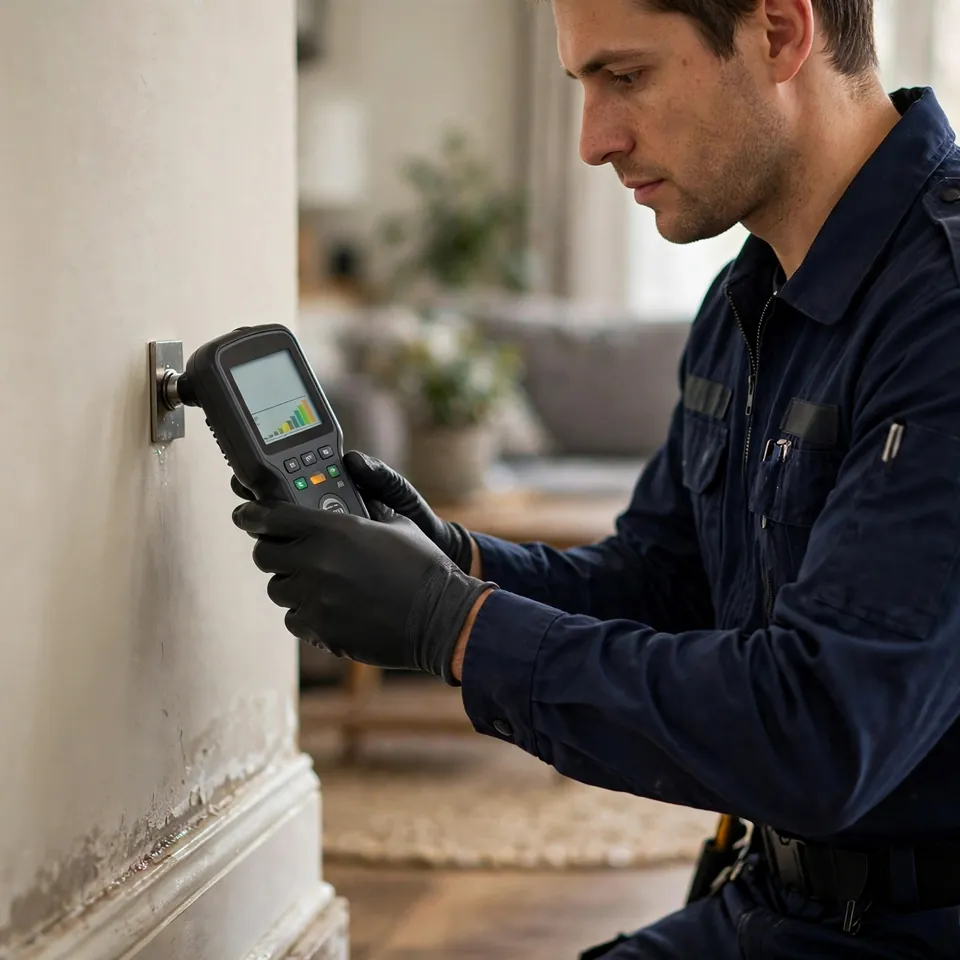
Assessment and moisture mapping. Technicians trace the water's path with moisture meters and thermal imaging. A burst supply line in a second-floor bathroom in a New Jersey colonial can send water down wall cavities, across the first-floor ceiling, and into the basement — the damage footprint is always bigger than it looks. The crew maps every wet area and checks the water category (burst supply lines are Category 1 clean water, unless the water sat long enough to pick up contaminants).
Extraction. Industrial pumps and weighted extractors remove standing water and pull moisture from carpet and pad. For a burst pipe that ran for hours, this can mean hundreds of gallons across multiple rooms.
Tear-out of damaged materials. Drywall that wicked water gets flood-cut above the water line. Saturated carpet padding is removed (it's rarely salvageable). Wet insulation comes out. Swollen baseboards and trim are pulled so the structural drying phase can reach every surface.
Structural drying. Air movers and dehumidifiers run for 3 to 5 days typically, with daily moisture readings until targets are met. A burst pipe in winter adds a complication: the home's heating must stay on to prevent further freezing while drying equipment runs.
Antimicrobial treatment and rebuild. Treated surfaces get sealed, then reconstruction begins — new drywall, insulation, flooring, paint. The burst section of pipe itself is repaired or replaced by a plumber, usually before or during the drying phase so the water can be turned back on.
| Cost Component | Typical Range | Notes |
|---|---|---|
| Plumber: pipe repair/replacement | $200 – $1,000 | Simple section repair vs. rerouting a line |
| Emergency water extraction | $500 – $2,500 | Depends on volume and rooms affected |
| Structural drying (equipment + monitoring) | $1,000 – $3,500 | 3–5 days of equipment typical |
| Drywall removal and replacement | $500 – $3,000 | Flood cuts in multiple rooms add up |
| Flooring replacement | $1,000 – $8,000 | Carpet cheapest; hardwood most expensive |
| Mold prevention treatment | $300 – $1,500 | Antimicrobial application to affected areas |
| Total typical burst pipe claim | $3,000 – $12,000 | Severe multi-floor events run higher |
Homeowners insurance almost always covers burst pipe damage as a "sudden and accidental" event — including the water damage cleanup, drying, and repairs. The pipe repair itself is sometimes covered and sometimes excluded depending on the policy, but the resulting water damage is the big-ticket item and it's covered. One caveat: if the burst resulted from neglected maintenance (like a known leak you ignored for months) or from failing to maintain heat during a freeze, the insurer may dispute the claim.
After going through a burst pipe disaster, prevention becomes a priority. The highest-impact measures:
For homes in freeze-prone regions — the entire northern tier, mountain states, and even the South during polar outbreaks — winterizing outdoor hose bibs (shut off interior valves, drain the lines) is a non-negotiable annual chore.
Burst pipe while you're on vacation. This is the nightmare scenario: a pipe bursts on day one of a two-week trip, and water runs for days. Damage is catastrophic — collapsed ceilings, ruined flooring throughout, and mold growth is virtually certain. Smart shutoff valves and a neighbor with a key are the best defenses. If you return to this, don't enter if ceilings are sagging or water is near the electrical panel — call for help first.
Slab leaks. A burst or leaking pipe under a concrete slab foundation — common in Texas, Arizona, and Florida homes — shows up as hot spots on the floor, unexplained high water bills, or water seeping from slab edges. These require specialized detection (acoustic equipment) and often rerouting the line overhead rather than breaking the slab.
Frozen pipe that hasn't burst yet. If a faucet gives you nothing but a trickle during a freeze, you may have a frozen — not yet burst — pipe. Shut off the main, open the faucet, and thaw the pipe gently with a hair dryer or warm towels, working from the faucet back toward the frozen section. Never use a torch or open flame. If the pipe is already split, you'll know when it thaws — that's when you need the main shutoff and a cleanup crew.
Good to know
In nearly all cases, yes. Burst pipes are the textbook example of "sudden and accidental" water damage, which standard homeowners policies cover — including extraction, drying, tear-out, and reconstruction. What's sometimes excluded is the cost of repairing the pipe itself, and claims can be disputed if the burst resulted from negligence, like leaving the heat off during a freeze or ignoring a known leak for months.
A lot more than you'd guess. A 1/2-inch supply line at 60 psi flows roughly 40+ gallons per minute. A pipe that bursts at midnight and isn't discovered until 7 AM can release over 15,000 gallons — enough to flood an entire first floor several inches deep and collapse ceilings below. This is why shutting off the main valve immediately is the most important step you can take.
Absolutely — it's one of the most common causes of household mold. Drywall, wood, and insulation soaked by a burst pipe create ideal mold conditions, and colonization can begin within 24 to 48 hours. Fast extraction, removal of soaked porous materials, antimicrobial treatment, and verified structural drying are what prevent a burst pipe from turning into a [mold remediation](/services/mold-remediation/) project weeks later.
It depends on the damage scale and your deductible. If total damage is only slightly above your deductible, paying out of pocket may be smarter to avoid a claim on your record. For the typical burst pipe scenario — multiple rooms, drying equipment, drywall and flooring work totaling $5,000 to $12,000 — filing is usually the right call. Get a professional assessment first so you know the real scope before deciding.
Extraction takes hours; structural drying takes 3 to 5 days of continuous equipment operation; reconstruction takes 1 to 4 weeks depending on how many rooms were affected. A single-room burst pipe incident can be fully resolved in about two weeks. A multi-floor event with hardwood floor replacement and extensive drywall work can take six weeks or more.
A burst pipe is a sudden rupture of a visible or accessible supply line — dramatic and fast. A slab leak is a slow or sudden failure of a pipe running beneath your concrete foundation — hidden, often discovered through high water bills, warm floor spots, or water seepage. Slab leaks need specialized acoustic detection to locate and often require rerouting the line rather than digging up the slab. A burst pipe is an emergency, but it's a solvable one — thousands of homeowners go through it every winter and come out fine on the other side. The difference between a bad week and a financial disaster is measured in minutes: shut off the water, document the damage, and get professionals on-site fast. If you're dealing with a burst pipe right now, call **Water Damage Cleanup Now** at **(855) 529-0071** — a local crew can start emergency extraction today and stop the damage from spreading.
Call (855) 529-0071 — 24/7 emergency help across 17 states. Free inspection, written scope.